Waterproofing · Sri Lanka
Waterproofing in Sri Lanka carries a harder load than almost any temperate market: two monsoons, humidity that slows curing, intense UV and daily thermal movement. A system that performs in a dry climate can fail here within a few seasons. This guide compares the four families used on Sri Lankan buildings. If you are still weighing suppliers, start with choosing a building material supplier.
The load
Four stresses act on a waterproofing system here, usually at once. Rainfall records from the Department of Meteorology show how concentrated the two monsoon seasons are. Any surface that ponds carries a sustained hydrostatic load for days afterwards.
Humidity extends curing times and can trap moisture beneath a membrane. Direct UV degrades unprotected liquid systems on exposed roofs. And thermal expansion moves a slab enough each day to open hairline cracks.
Add coastal salt within a few kilometres of the shoreline around Colombo, Negombo and Galle, and an under-specified system can last a fraction of its published figure. Therefore selection here should start from the exposure condition, not from the price per square metre.
Any surface that ponds carries a sustained water load for days after heavy rain.
At a glance
Relative cost per square metre only - cost rises broadly from cementitious, through liquid and sheet systems, to polyurea. Firm figures come from a survey and quotation, never from a table.
| System | Best for | Key advantage | Watch | Relative cost |
|---|---|---|---|---|
| Cementitious | Tanks, sumps, basements, wet areas | Bonds to damp substrates; vapour-permeable | Rigid grades will not bridge moving cracks | |
| Liquid-applied membrane | Roof slabs, terraces, balconies | Fully seamless; high elongation | Film thickness must be achieved everywhere | |
01
Cement-based systems bond directly to concrete and masonry. They remain the default for water-retaining structures and below-grade work. They are vapour-permeable, so the substrate can breathe instead of trapping construction moisture.
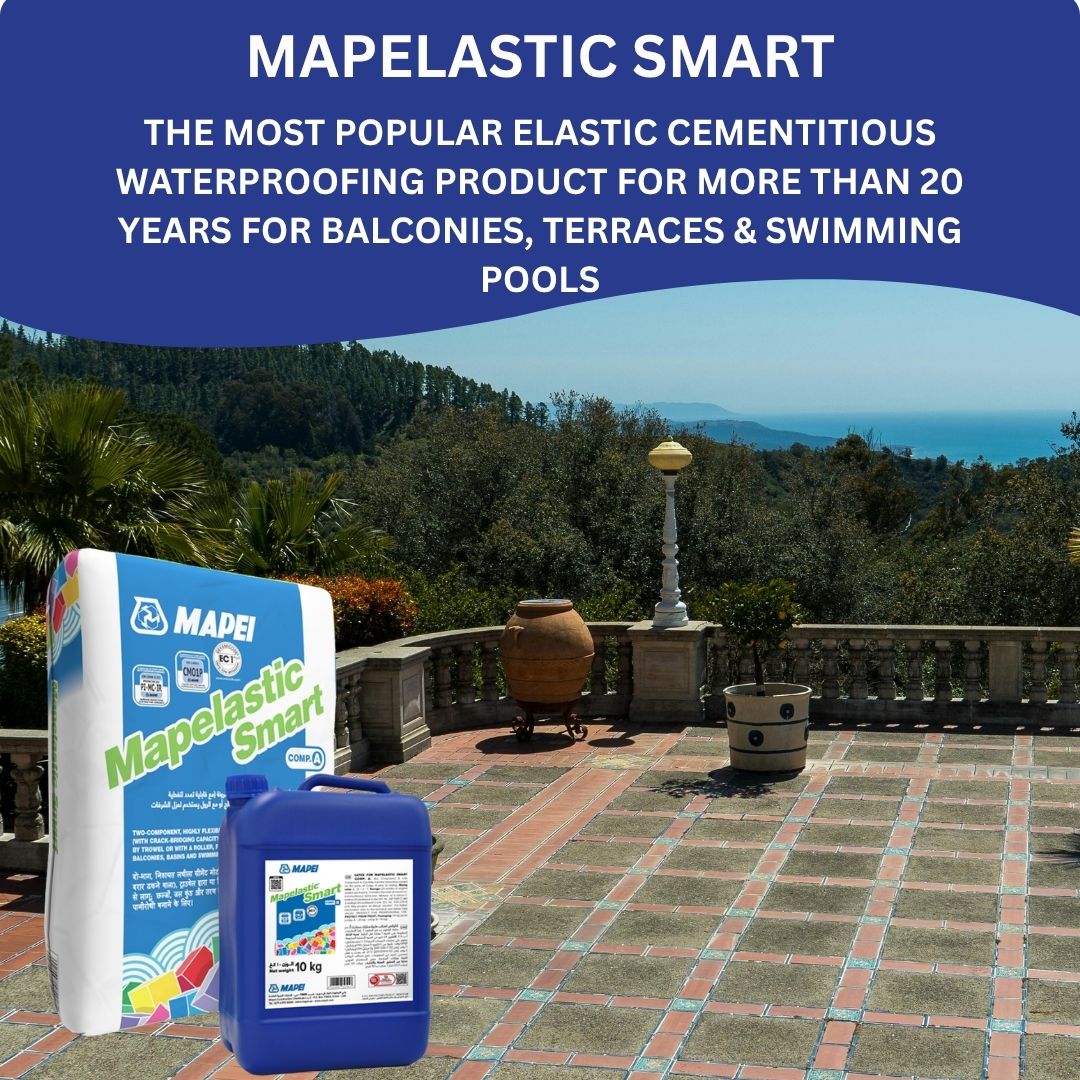
They can also go onto a damp substrate - a real advantage in Sri Lankan humidity. Flexible two-component grades add crack-bridging that rigid slurries lack. We supply Mapelastic Smart for wet areas and Planiseal 288 for structures under pressure.
02
Acrylic, polyurethane and hybrid membranes cure into a seamless elastic film. With no laps or joints, they detail cleanly around upstands, outlets, parapets and pipe penetrations - the real failure points on almost every roof.
Elongation matters most, because it absorbs daily slab movement without splitting. Polyurethanes generally outperform acrylics on elongation; acrylics cost less and pair well with a heat reflective waterproof paint topcoat. The constraint is UV: an unprotected film on an exposed roof will chalk.
Decision helper
In practice the application drives the choice more than any general ranking. Find the surface below, then confirm it on site - geometry and substrate condition can change the answer.
Flat concrete roof slab, exposed
Flexible liquid-applied system, UV-stable or with a reflective topcoat; sheet membrane where the area is large and simple
Bathroom and wet area
Flexible two-component cementitious system under tiling
Water tank or sump
Cementitious system with potable-water approval where relevant
Basement and retaining wall
Cementitious tanking, with drainage design addressed alongside
Podium and trafficked deck
Polyurea or heavy-duty polyurethane with a wearing layer
Swimming pool
Cementitious system specified for continuous immersion
For flat roofs specifically, see Roof waterproofing in Colombo. Our earlier waterproofing membrane comparison goes further on individual products.
Where outcomes are decided
Most waterproofing failures inspected on Sri Lankan buildings are not product failures. They are bond failures, thickness failures or detailing failures. A membrane over dust, curing compound or an unsound surface will debond, whichever system it is.
A membrane applied at half its specified thickness also fails early, regardless of its published elongation. Skipping any stage in the sequence is where money is saved - and where the failure comes from.
Timing is part of preparation too. Our guide to waterproofing before the monsoon explains why the work belongs in a dry window.
Survey the slab and check its moisture state
Remove failed material, dust and contaminants
Repair cracks and honeycombing
Form fillets at every wall-floor junction
Prime exactly as the system specifies
Apply at the stated rate and coat count, reinforcing outlets and penetrations
In store now
Live from our catalogue. See all Waterproofing products or book our Waterproofing service.
Value
The meaningful comparison is cost per year of service life, not cost per square metre. However, that comparison only holds when both systems are correctly prepared and applied. Indicative figures by system type sit on the waterproofing cost page.
We do not quote lifespans in years without the manufacturer's data for your exposure condition. Warranty terms, and the difference between material and installation cover, are set out under warranty and after-care.
Proven on Colombo high-rise
Materials and finishes we supplied include Marina square residencies, a landmark waterfront tower where coastal exposure shapes every specification.
Our quality system carries our ISO 9001:2015 certification, and supply runs island-wide - see delivery coverage and lead times.
Quick answers
Only when the existing layer is sound, compatible and well bonded. A debonded membrane has to come off, because a new coat over it simply moves the failure plane. A survey decides which applies to your roof.
Water enters at a detail such as an outlet or penetration, then tracks along the slab before it shows. The ceiling stain can sit metres from the entry point, which is why detailing is inspected first.
Yes, indirectly. Lowering slab temperature reduces daily thermal movement, so the membrane beneath works less hard. It also slows UV degradation on exposed roofs, extending the life of the whole build-up.
Assurance
 ISO 9001:2015Quality Management System · Certified
 CCI Sri LankaChamber of Construction Industry · Member
Good to know
We survey first, then specify the system for the exposure - not the other way round.
Extended curing times can trap moisture beneath a membrane if the applicator does not allow for it.
Unprotected liquid systems degrade far faster than temperate-climate data suggests.
Concrete moves enough every day to open hairline cracks that rigid coatings cannot bridge.
| Large simple roofs, podiums, tanking |
| Factory-controlled thickness |
| Laps and terminations are failure points |
| Polyurea | Industrial decks, tanks, tunnels | Cures in seconds; very high toughness | Specialist equipment and crews only |
03
Spray-applied polyurea cures in seconds and forms a seamless membrane tough enough for mechanical abuse. It is the specification for trafficked decks and structures where downtime is measured in hours.
The trade-offs are real. It needs plural-component spray equipment, trained applicators and tight priming tolerances, and it carries the highest cost of the four. On a domestic roof it is over-specified; on a plant deck it is often the only answer.
04
Pre-formed bituminous torch-on and self-adhesive membranes deliver a factory-controlled thickness. That removes the biggest variable in liquid systems, and on large simple areas they are efficient and reliable.
Their weakness is joints. Every lap and termination is a potential failure point that depends on workmanship. On a roof crowded with outlets and pipes, a seamless liquid system is often the safer specification.
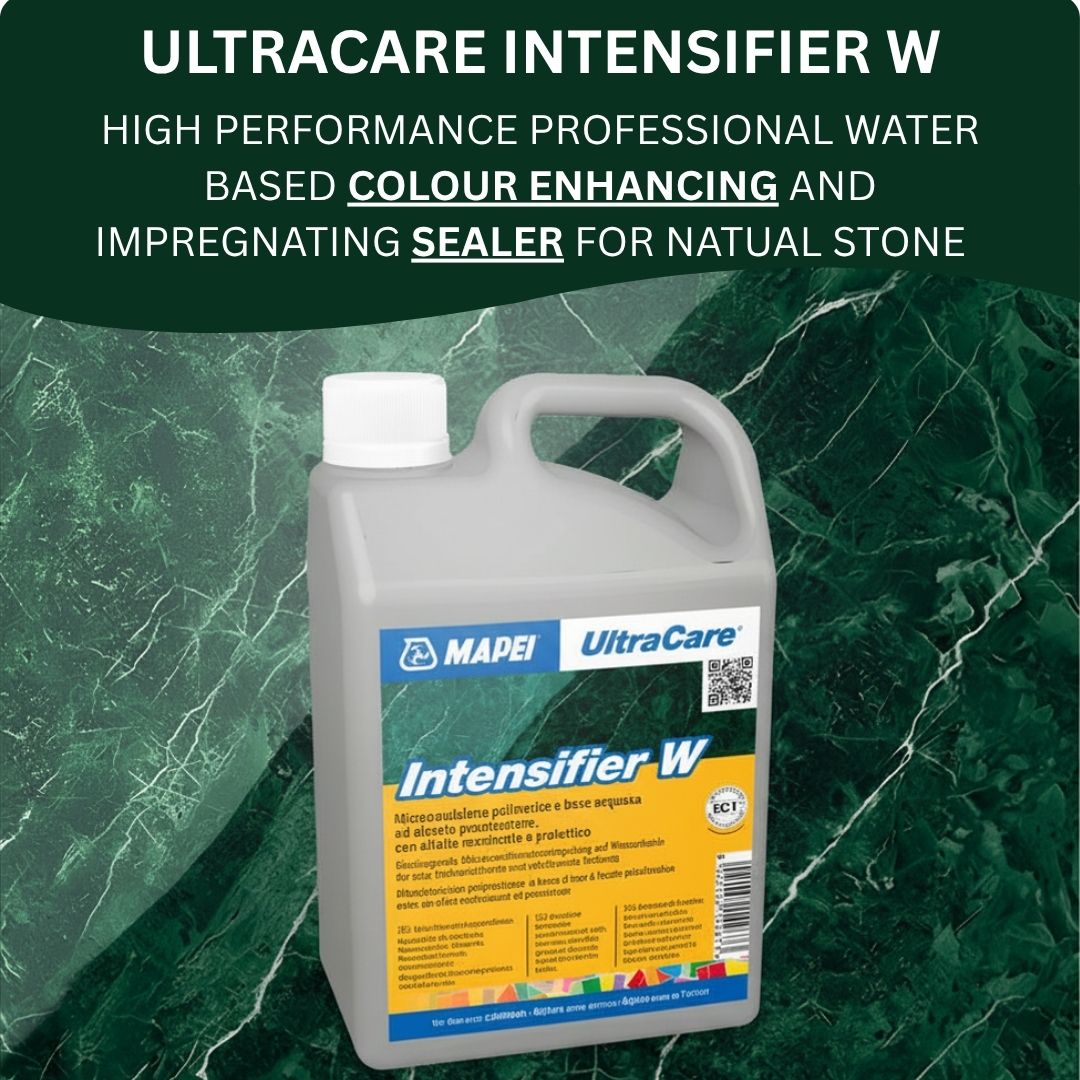
Ultracare Intensifier W
1 Ltr Jerry Can
LKR 17,950