
October is when the rain stops being seasonal and becomes structural. The south-west monsoon has spent four months testing every roof, wall and joint on the western side of the island, and the second inter-monsoon now brings heavy afternoon storms to the whole country at once. Small failures that held through August tend to open up now.
This is a practical guide to monsoon preparation for buildings in Sri Lanka - a walk from the roof down to the basement, and from the outside in, through the things worth checking before the worst of the rain arrives. It applies to a family home, an apartment block or a commercial building alike; only the scale changes.
If you own a home and want the waterproofing detail specifically, our earlier guide on waterproofing before the monsoon covers roofs, bathrooms and external walls in depth. This checklist is broader. It is about the whole building, and how water moves through it.
Why October Is the Month to Check Your Building
The Department of Meteorology tracks Sri Lanka's rainfall across four seasons: the first inter-monsoon from March to April, the south-west monsoon from May to September, the second inter-monsoon from October to November, and the north-east monsoon from December to February.
The second inter-monsoon is the one that catches buildings out. Rain is no longer confined to one side of the island, thunderstorms build quickly through the afternoon, and low-pressure systems over the Bay of Bengal can bring days of sustained rain. For Colombo and the west coast, October and November are typically among the wettest months of the year. The north-east monsoon then carries the rain on to the north and east until February.
The practical point is timing. A building that has just come through the south-west monsoon may already have a hairline crack, a lifted membrane edge or a blocked outlet. October is the last comfortable window to find them, before the rain makes every repair slower, more expensive and dependent on the weather.
Start at the Top: Roofs, Slabs and Parapets
Most serious monsoon damage starts on the roof, because that is where water sits longest. Work through these in order:
- Clear the roof slab first. Leaves, silt and debris hold water against the surface and hide the very problems you are looking for. After clearing, note any area where water still pools an hour after rain. Ponding means the falls are wrong or an outlet is restricted.
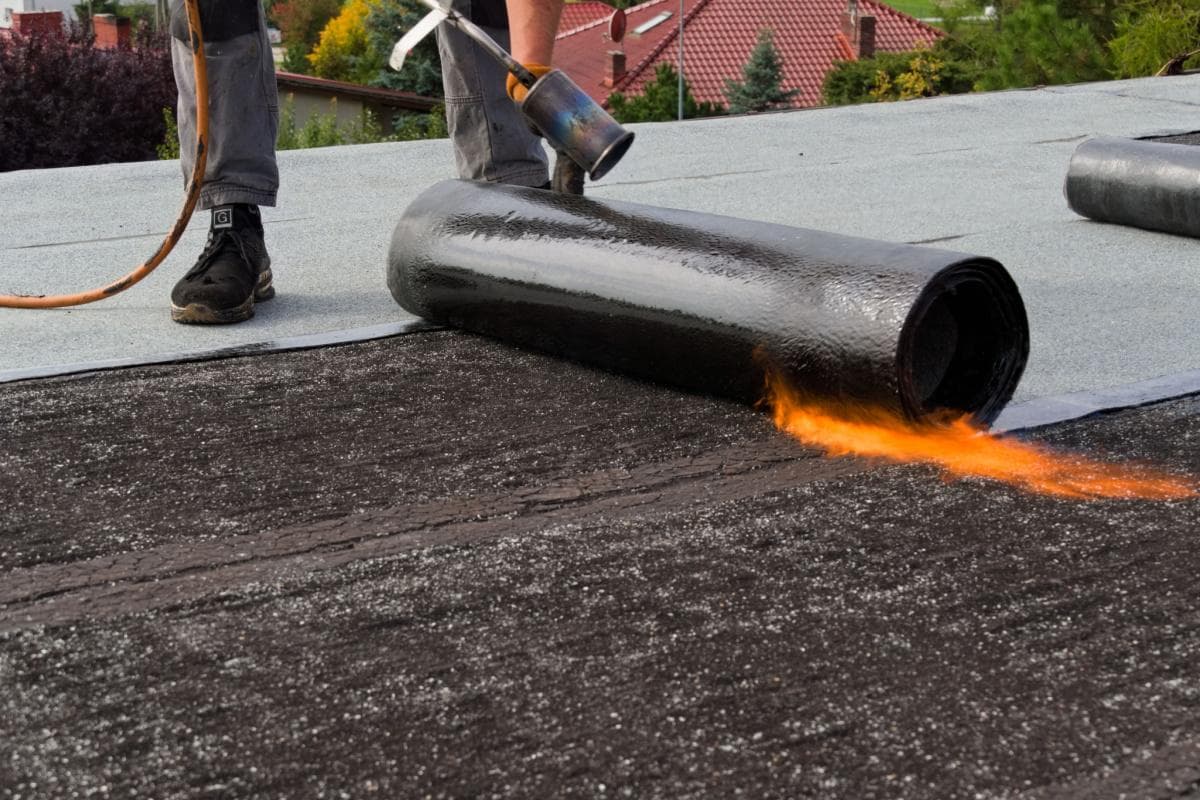
- Check the membrane at its edges. Waterproofing rarely fails in the middle of a slab. It fails where it turns up a parapet, around a corner or across a construction joint. Look for lifting, cracking or a gap between the membrane and the wall.
- Inspect every penetration. Solar panel mounts, air-conditioning brackets, water tank stands and vent pipes all puncture the roof. Each one needs a sealed, flexible detail around it, and each one is a common leak path.
- Look along the parapet copings. Cracked copings and open joints let water run down inside the wall, where it appears weeks later as a damp patch on an internal ceiling.
For flat concrete slabs that need re-treating, a flexible cementitious membrane such as Mapelastic Smart bridges the fine cracking that movement and heat cause. Where the same roof also bakes through the dry season, an elastic coating like Mapeflex Therm RP answers both problems at once. Our page on roof waterproofing in Colombo explains the process, and the slab waterproofing cost guide explains what drives the price.
Gutters, Downpipes and Drains: Where Leaks Really Begin
This is the cheapest part of the checklist, and often the most valuable. A roof can be perfectly waterproofed and still flood a building if the water has nowhere to go.
- Clear every gutter, outlet and roof drain, then run water through them to confirm they flow freely.
- Check downpipe joints and brackets. A joint that leaks at ground level is a minor nuisance. One that leaks at the top of a wall soaks the facade every time it rains.
- Make sure water discharges away from the building, not against the base of a wall or into a planter built against the structure.
- Walk the site drainage. The ground should fall away from the building, and surface drains should be clear before the first heavy storm rather than after it.
There is a public-health reason to do this too. Still water in a blocked gutter, a ponding slab or an uncovered tank is exactly where mosquitoes breed, and dengue is a year-round concern in Sri Lanka. The National Dengue Control Unit leads the national effort against it. Clearing drainage protects the structure and the people in it.
The Facade: Walls, Cladding and Windows
Walls take wind-driven rain at an angle that roofs do not, and a single hairline crack in render lets water in behind the paint. Once inside, it causes blistering, salt deposits on the surface and mould on the inner face of the wall.
- Walk the building and look for fine cracks, especially around window openings, along floor-slab lines and where walls meet columns.
- Check the paint film. Chalking, flaking or blistering means the coating is no longer keeping water out. A waterproof, elastomeric exterior paint such as Cooltight W SLX 500 Si is designed to flex over hairline cracks and shed water. Our guide to the best exterior paint in Sri Lanka compares the options.
- Treat porous stone and paving. Natural stone cladding and paved areas absorb water readily. A water-repellent treatment such as Ultracare Rain Protector W reduces that absorption and the staining that follows it.
- Inspect the sealant around every window and door. Sealant that has cracked, shrunk or pulled away from the frame is one of the most common causes of internal damp. It is a small, inexpensive repair, and our sealant application service covers it.
Balconies, Wet Areas and Below Ground
- Balconies should fall towards their drain, and the waterproofing must turn up behind the door threshold. Water that tracks under a balcony door usually means that upturn is missing or damaged.
- Bathrooms and kitchens fail at the grout and the silicone joints long before the tiles themselves do. Cracked grout lines are worth repairing before humidity peaks.
- Basements, lift pits and underground tanks face a different problem altogether: water pushing in under pressure from the surrounding ground. That calls for a system built to resist hydrostatic pressure, such as Planiseal 288 Plus, rather than a surface membrane.
The right choice depends on the substrate and the exposure. Our article on which waterproofing membrane to use walks through that decision, and Sri Lanka's top waterproofing systems sets out every system we supply.
Inside the Building: Damp, Humidity and Mould
Monsoon humidity does not need a leak to cause damage. Shaded walls, the backs of wardrobes, corners behind furniture and the silicone joints in bathrooms all grow mould when moisture has nowhere to go.
This matters beyond appearance. The World Health Organization's guidelines on dampness and mould link damp indoor environments with respiratory symptoms and asthma. The US Environmental Protection Agency puts the principle plainly: the key to mould control is moisture control, and water-damaged areas should be dried within 24 to 48 hours.
- Fix the water source first. Cleaning mould off a wall that is still getting wet only buys time.
- Then remove the growth properly. Ultracare Mould Remover targets the black spotting on grout, render and around joints, and Ultracare Anti-Mould Protector slows it returning. Our guide to mould removal in Sri Lanka covers the full method.
- Keep air moving in rooms that stay closed, and avoid drying laundry indoors in rooms that are already prone to damp.
If You Have a Project Under Way
For developers and contractors, the monsoon changes the programme as much as the building.
- Plan exterior coatings and waterproofing around dry windows. Most cementitious and coating systems need a dry substrate and a period without rain to cure properly. Follow the manufacturer's data sheet - MAPEI publishes technical documentation for each of its systems.
- Store cement-based materials off the ground, covered and dry. Adhesives, grouts and renders that take on moisture in storage will not perform as specified.
- Order early. Rain slows deliveries and site access alike. Our page on delivery and lead times explains how we schedule supply.
- Watch the official warnings. The National Building Research Organisation issues landslide early warnings for hill-country sites, and the Disaster Management Centre publishes flood and weather alerts nationally.
After Every Heavy Storm: A Five-Minute Walk-Round
The first heavy storm of the season is the best inspection you will get. Within a day of it, check:
- Ceilings and the tops of walls, for new stains
- The base of walls and skirting, for damp
- Window sills and the floor beneath each window
- Roof drains and outlets, to confirm they are still flowing
- Water still standing on the roof, on balconies or around the building
- New cracks, or old cracks that have widened
Photograph anything you find and note the date. A stain that appears after one storm and stays the same size is a different problem from one that grows each week, and the photographs make diagnosis much quicker.
Frequently Asked Questions About Monsoon Preparation for Buildings in Sri Lanka
When is the monsoon season in Sri Lanka?
Sri Lanka has two monsoons. The south-west monsoon runs from May to September and the north-east monsoon from December to February. Between them, the second inter-monsoon in October and November brings rain to the whole island, and is typically among the wettest periods of the year for Colombo.
What should I check first before the monsoon?
Start with the roof and the drainage. Clear the roof slab, gutters and outlets, and check the waterproofing at the parapets and around every penetration. Most serious water damage begins there.
Can I waterproof a roof during the rainy season?
It is possible, but harder. Most waterproofing systems need a dry surface and a rain-free period to cure, so work during the monsoon depends on finding a dry window. An inspection before the heavy rain arrives is the more reliable approach.
Is a new coat of exterior paint enough to stop damp?
Only if the paint is the problem. Ordinary paint does not bridge cracks or seal joints. If water is entering through cracked render, failed sealant or a roof detail, that needs repairing first, and a waterproof, elastomeric exterior coating then protects the wall.
Do you inspect buildings before the monsoon?
Yes. We visit sites across Colombo and the suburbs, identify where water is getting in, and recommend the system that suits the substrate. You can book an on-site visit through our request form.
Get Your Building Ready for the Rain
Monsoon preparation is rarely about one large repair. It is a series of small ones - a cleared outlet, a resealed window, a re-treated parapet - done before the rain finds them first.
If you would like a second opinion on your building, book an on-site visit and our team will walk it with you, or read more about our waterproofing service.