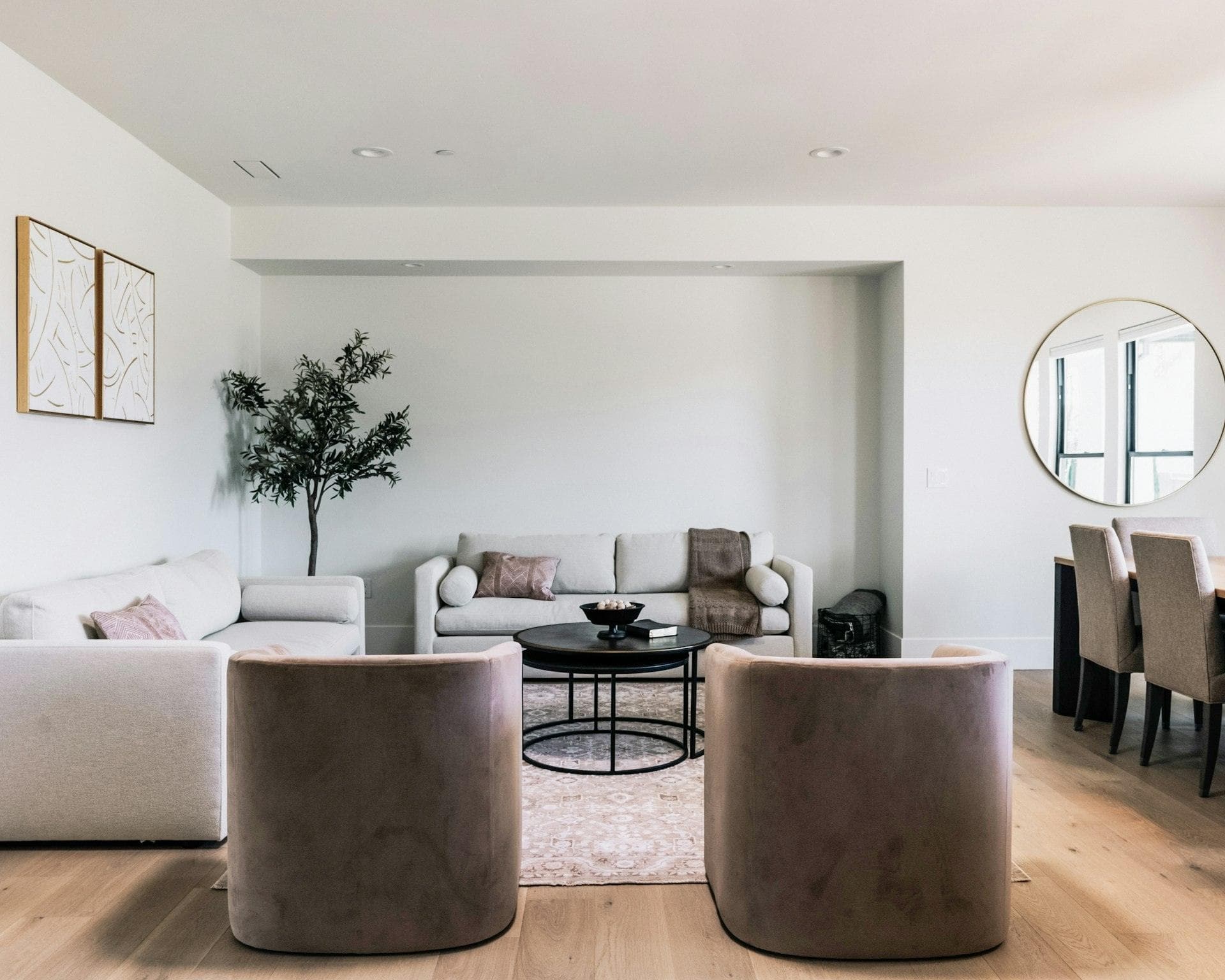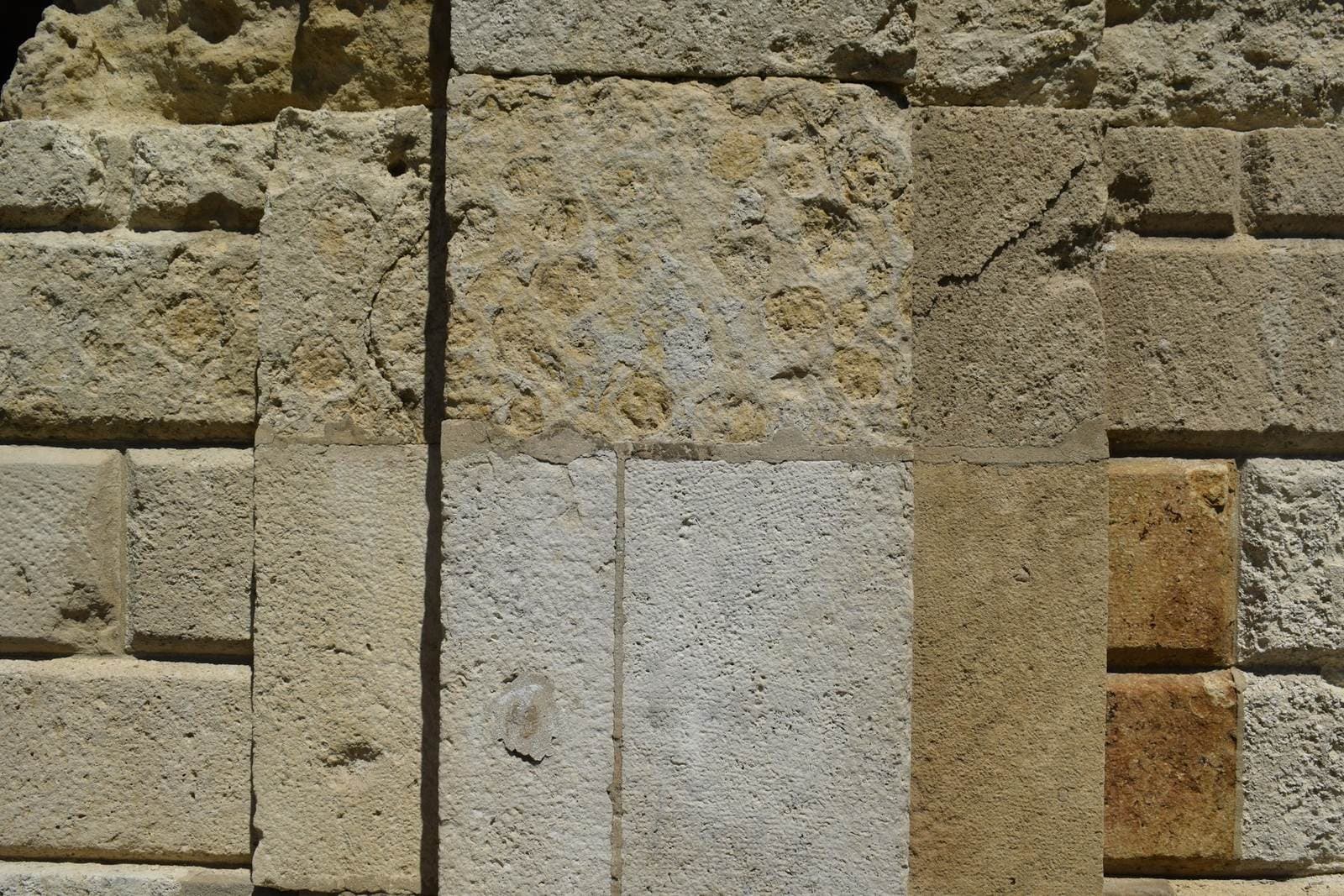
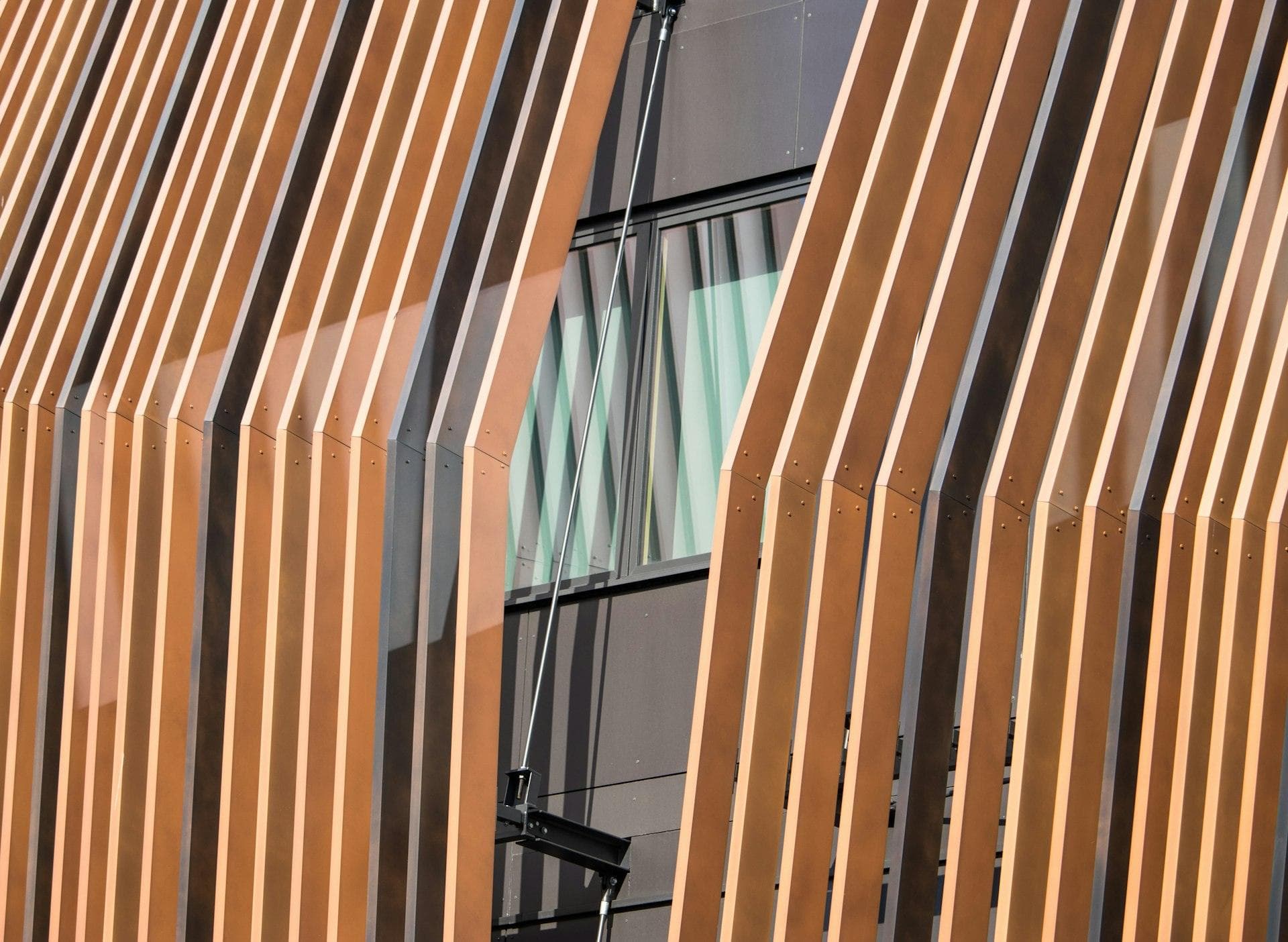
HPL board turns up on façades, canopies, gates, balconies, restroom cubicles, kitchen worktops and laboratory benches. It is sometimes searched for as “HPL panel”, “H panel” or “high pressure laminate”. They are the same material.
This guide explains what HPL is, why it suits Sri Lanka's climate, where it is used, and what to check before you specify or buy it. Our overview of HPL panels shows the full range we supply and install.
What HPL board is
HPL stands for high-pressure laminate. It is made by pressing multiple layers of kraft paper, impregnated with resin, together with a decorative surface layer under very high pressure and temperature. The result is a dense, hard panel in which the layers are fused into one solid material.
The decorative layer is what gives HPL its range of looks: woodgrain, natural stone textures, metallic surfaces, solid colours and custom patterns.
Why HPL works in Sri Lanka's climate
- Moisture resistance. Exterior-grade HPL does not swell or warp in heavy rain and humidity.
- UV and fade resistance. It keeps its colour in strong tropical sun.
- Scratch and stain resistance. The surface is hard-wearing and easy to clean.
- Low maintenance. There is no repainting cycle, unlike rendered and painted surfaces.
Where HPL board is used
Because it is strong, stable and available in so many finishes, HPL is used both outside and inside buildings:
- Exterior: façades and curved façades, canopies, gates, entrance portals, balcony panels and floors, pool areas, soffits, louvres and outdoor furniture.
- Interior: restroom cubicles, wall partitions, kitchens, worktops, laboratory tabletops, staircases and signage.
Interior, exterior and compact grades
Not all HPL is the same. Decorative HPL sheets for interiors are thin and bonded to a backing board, such as for kitchen cabinets. Compact HPL is much thicker and self-supporting, which is why it is used for cubicles, worktops and external cladding. Exterior grades add a weather- and UV-resistant surface. Always confirm that the grade matches the application, especially outdoors.
What to check before you buy HPL
- Grade. Use exterior grade for anything outdoors.
- Fire classification. Ask for the fire classification and the documents behind it, particularly for façades and commercial buildings.
- Technical documentation. Ask for datasheets and the manufacturer's warranty terms in writing.
- Batch matching. For large or phased projects, panels should come from matched batches so colours are consistent.
- Installation method. External HPL should be fixed to an engineered subframe with a ventilated cavity and proper waterproof detailing. Our page on HPL cladding installation explains the process.
How much does HPL board cost?
HPL pricing depends on grade, thickness, finish and quantity, and installed cost also depends on the subframe and fixing method. For current figures and what drives them, see our HPL board price guide, or request an itemised quote for your project.
HPL compared with common alternatives
- Painted render. Render needs repainting every few years in Sri Lanka's sun and rain. HPL keeps its colour without a repainting cycle.
- Timber. Timber cladding and gates need regular staining or varnishing and can rot or be attacked by insects. HPL woodgrain finishes give a similar look without that upkeep.
- Tiles on external walls. Tiles depend on the adhesive bond to the wall. HPL on a ventilated subframe is mechanically fixed and lets the wall behind it breathe.
Looking after HPL
HPL needs very little maintenance. Routine cleaning is usually a soft cloth with water and a mild detergent, followed by a rinse. Avoid abrasive pads and harsh solvents that could mark the surface, and follow the manufacturer's care guidance for the specific panel.
Frequently asked questions
Is HPL the same as laminate?
HPL is a type of laminate made under high pressure. Compact and exterior-grade HPL are far thicker and tougher than the thin decorative laminates used on furniture.
Can HPL be used outdoors in Sri Lanka?
Yes, provided it is exterior-grade HPL installed on a ventilated subframe with proper detailing.
Is HPL fire-rated?
Fire-rated HPL grades are available. Always ask for the fire classification and documentation for your application.
Does C&S Projects install HPL as well as supply it?
Yes. Our in-house teams install HPL for façades, canopies, balconies, cubicles and more across Sri Lanka.
Talk to C&S Projects
Request an itemised quote for your HPL project, call or WhatsApp +94 77 785 5751, or visit our showroom at 53/3 Buthgamuwa Road, Rajagiriya (Mon–Sat, 10:30 am – 5:30 pm).