
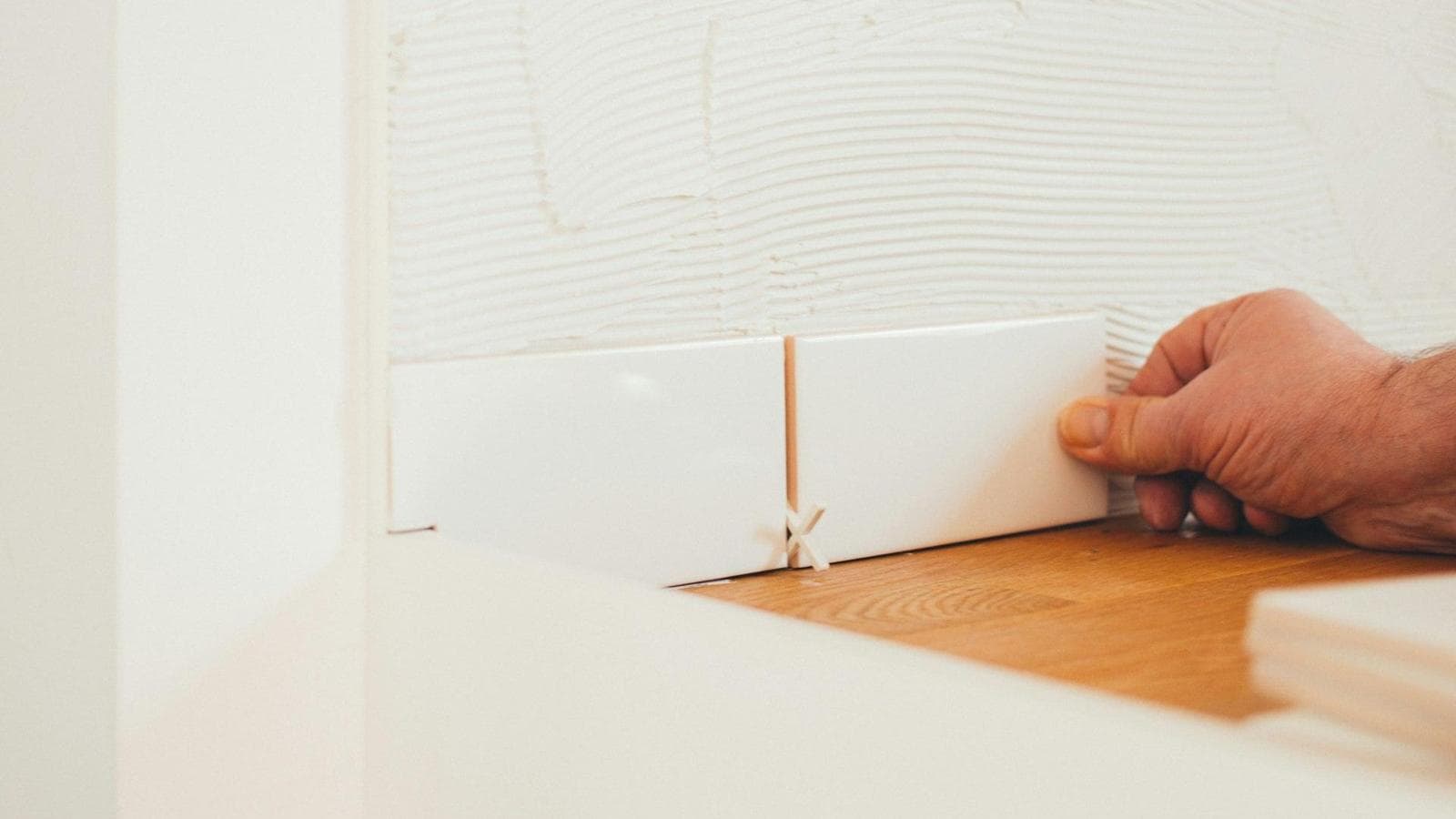
Tiles that sound hollow when tapped, lift at the corners, crack across the middle or grow mould in the joints are rarely the fault of the tile. They are almost always a tile fixing problem: the wrong bed, a poor substrate, no waterproofing or the wrong grout.
This guide explains what goes into a tiling job that lasts, so you can brief tile workers properly and check the work before you pay. If you are looking for a team to do the work, see our page on tile installation contractors in Colombo.
Start with the substrate
Tiles can only be as flat and as sound as the surface they are fixed to. Floors and walls should be level, clean, dry and free of loose material. Uneven walls are levelled with a mortar such as Nivoplan or Planitop 130, and floors are checked for level and falls, before tiling starts.
Use adhesive, not sand and cement, for porcelain
Traditional sand-cement beds are still common, but they are not recommended for porcelain tiles. Porcelain absorbs very little water, so a sand-cement bed bonds poorly, and tiles can end up hollow or lift. Tile adhesives are designed to bond to dense tiles. Our guide to tile adhesive and grout covers the range in detail. The right adhesive depends on the tile, its size and where it is laid:
- Ceramic tiles in normal interiors: a standard tile adhesive such as Keraset.
- Large-format porcelain (600 × 1200 mm and above), exterior areas and floors that move: a deformable adhesive such as Keraflex Maxi S1.
- Glass mosaic and swimming pools: a specialist adhesive such as Adesilex P10.