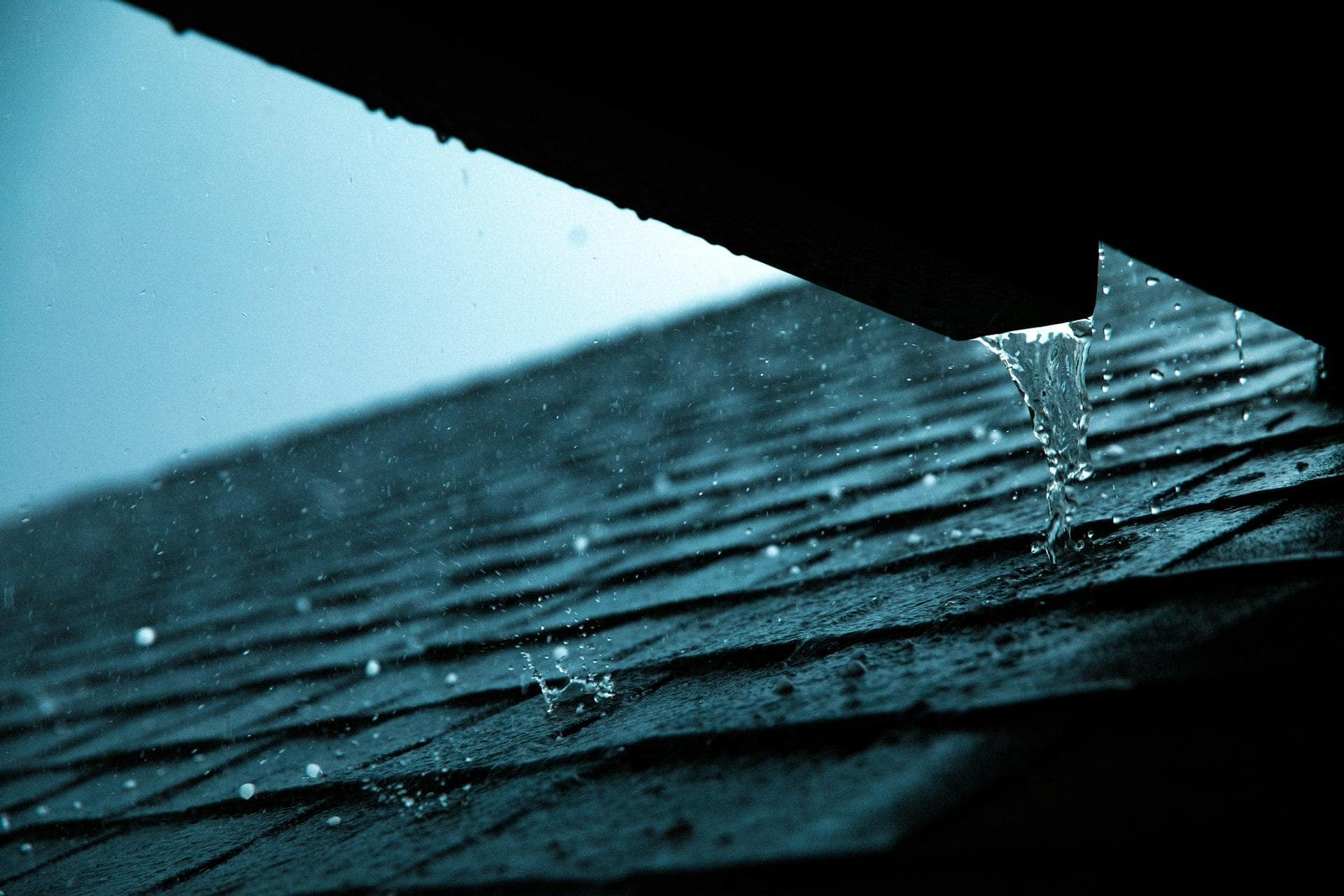
A brown patch on the ceiling after heavy rain is one of the most common calls we take in Colombo. It is also one of the most misread. The stain shows you where the water came out, not where it got in. On a concrete roof slab, water can enter at one point and travel a metre or more along the slab, a cold joint or a conduit before it finds a way through.
That is why a repair that starts with the stain so often fails. This guide explains where flat roofs in Sri Lanka usually fail, what you can safely check yourself, how to decide between a patch and a full re-waterproof, and what a proper roof leak repair should include.
Why the stain is rarely where the water gets in
Concrete slabs are not single, seamless blocks. They contain construction joints, conduits for wiring, the pockets around pipes and drains, and hairline cracks that open and close as the slab heats and cools. Water that gets past the surface follows these paths until it reaches a weak point in the ceiling below.
The timing of a leak is a useful clue. A leak that appears within minutes of rain starting usually points to an opening close above it. One that appears hours later, or keeps dripping after the rain stops, usually means water is travelling through the slab or sitting in a blocked area of the roof.
The six places flat roofs in Colombo usually fail
When we survey leaking roofs, the cause is almost always at a detail rather than in the middle of the slab. These are the points to look at first:
- Rainwater outlets and drains. Leaves and debris block outlets, water backs up, and the area around the outlet is under water for hours.
- Upstands and parapet junctions. The corner where the roof meets a wall moves differently from the flat slab, and coatings crack along it.
- Pipe and service penetrations. Water tank legs, solar brackets, cable entries and vent pipes are each a break in the waterproofing.
- Ponding. Areas where water stands for more than a day after rain put constant pressure on any weakness.
- Cracks from thermal movement. Exposed slabs heat up in the sun and cool at night, and the movement opens hairline cracks.
- Old coatings that have reached the end of their life. Brittle, chalky or peeling coatings no longer bridge movement.
What you can check safely before calling anyone
You do not need to diagnose the leak yourself, but a few observations make a survey faster and more accurate. Only go onto a roof if there is safe access and a parapet or edge protection.
- Note when the leak appears: during rain, hours after, or only in prolonged rain.
- Clear outlets and gutters, then see whether the leak changes in the next rain.
- Look for areas where water is still standing a day or two after rain.
- Photograph cracks, lifted coating and gaps around pipes and brackets.
- Check whether new equipment, such as a water tank or solar panels, was fixed to the roof recently.
If clearing a blocked outlet stops the leak, the waterproofing may still be sound. If it does not, the problem is in the slab or the coating.
Patch or re-waterproof: how to decide
A local repair makes sense when the failure is in one place and the rest of the waterproofing is in good condition: one cracked upstand, one poorly sealed penetration, one outlet. The repair area is cleaned back to sound material, primed, detailed and coated, overlapping well onto the sound coating around it.
A full re-waterproof is the better choice when there are several failure points, when the old coating is brittle across the roof, or when ponding is widespread. Patching an old system at that stage tends to move the leak rather than stop it.
The system itself should match the roof. Flexible cementitious membranes such as Mapelastic Smart, which is applied to a minimum thickness of 2 mm and bridges cracks up to 2 mm, suit most concrete slabs and areas that will later be tiled. Where the slab moves more, Mapelastic High Flex is designed to bridge cracks wider than 2 mm. On exposed roofs, a heat-reflective waterproof topcoat reduces the heat the slab absorbs, which also reduces movement.
Time the repair around the monsoon
Waterproofing needs a dry, clean surface and dry weather while it cures. In Sri Lanka, that means planning around the southwest monsoon (May to September), the inter-monsoon periods and the northeast monsoon (December to February). A survey can be done at any time, but the work itself is best scheduled for a dry window, and emergency repairs during the rains should be treated as temporary until the full repair can be done. Our monsoon-ready checklist covers what to check across the whole building before the rains.
What a proper roof leak repair should include
Whoever you hire, a roof leak repair should follow a clear sequence. This is how C&S Projects approaches it as part of our waterproofing service:
- Survey and diagnosis. Inspect the roof, outlets, upstands and penetrations, and trace the likely entry point before quoting.
- Specification. Recommend a local repair or a full system, and name the products and thicknesses.
- Surface preparation. Remove failed coatings, repair cracks and clean the surface back to sound concrete.
- Detailing first. Treat outlets, corners, upstands and penetrations before the main area is coated.
- Application by our in-house team. Apply to the specified thickness, with reinforcement where needed.
- Testing and handover. Flood-test or wet-test the outlets where practical, then hand over with maintenance guidance.
For the full roof service, see our page on roof waterproofing in Colombo.
Frequently asked questions
Can a roof leak be fixed from inside the house?
Not reliably. Sealing the ceiling hides the symptom while water continues to enter the slab from above, which can damage reinforcement over time. The repair needs to be made where water enters, on the roof.
How long does a flat roof leak repair take?
A local repair is often completed in a day or two, plus curing time. A full re-waterproof depends on the roof area and the preparation needed. We confirm the timeline after the survey.
Can I repair my roof during the rainy season?
Surveys and temporary measures can be done at any time. Permanent waterproofing needs a dry surface and dry weather while it cures, so it is best scheduled for a dry window.
Do you cover roofs outside Colombo?
Yes. C&S Projects supplies and installs across Sri Lanka. Contact us with your location and we will arrange a survey.
Talk to C&S Projects
Book an on-site roof survey, call or WhatsApp +94 77 785 5751, or visit our showroom at 53/3 Buthgamuwa Road, Rajagiriya (Mon–Sat, 10:30 am – 5:30 pm).